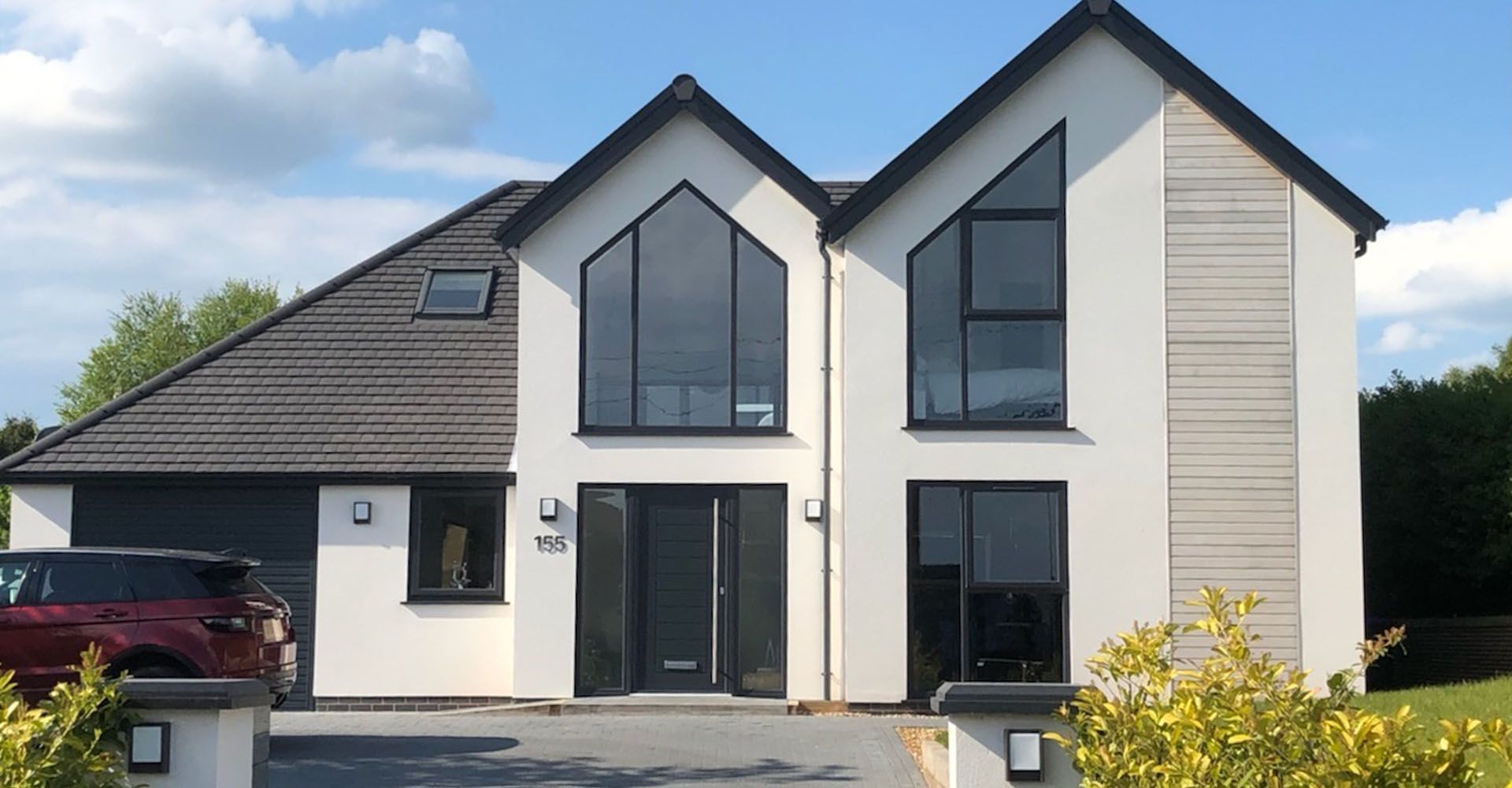
Different Types of Render Finishes
This guide explains the main render systems and decorative finishes used on buildings today. We’ll cover how they work, visual characteristics, where they perform best and maintenance considerations.
Cement render
Cement render is a traditional, robust mix of cement, sand and water. It’s versatile — can be left smooth, textured or painted. It can be modified with additives (acrylics, silicones) to improve flexibility and water resistance.
Common finishes: Smooth trowel, float/polished, dash/roughcast.
Lime render
Lime render uses hydraulic or non-hydraulic lime and is breathable, making it ideal for historic or moisture-prone buildings. It self-heals small cracks and allows moisture to evaporate through the fabric of the wall.
Best for: Listed buildings, traditional masonry and conservation projects.
Acrylic & silicone-enhanced renders
These are cement or polymer-based renders blended with acrylic or silicone resins. They offer enhanced flexibility, adhesion and weather resistance, and are often used for coloured through-renders and lightweight systems.
Pros: Improved crack resistance, low maintenance.
Monocouche (through-coloured single coat)
Monocouche is a factory-coloured, single-coat render applied in one pass to achieve a consistent through-colour finish. It reduces the need for painting and delivers a modern, low-maintenance façade.
Note: Colour matching for repairs requires keeping records of product and colour codes.
Tyrolean, Stucco & Acrylic textured finishes
Tyrolean (granolithic) and stucco finishes are decorative textured renders applied with a hopper gun or hand-trowelled to create patterns and relief. They’re popular where a textured, durable surface is desired.
Uses: Feature walls, apartment exteriors and commercial façades.
Dash & Roughcast
Coarse aggregates are thrown onto wet render to create a rugged, impact-resistant finish. Offers durability and hides substrate imperfections but can be abrasively textured.
Italian Stucco & Limewash effects
Italian (Venetian) stucco is a fine plaster polished to a marble-like sheen — often multi-layered with lime or Portland mixes. Limewash over renders produces a soft, breathable painted appearance used on traditional and modern homes alike.
Insulated Render Systems (ETICS)
ETICS combines insulation boards fixed to the wall with a reinforced basecoat and protective finish. Finishes can be smooth or textured; the system greatly improves thermal performance of existing buildings.
Considerations: Requires correct detailing at openings and movement joints to avoid problems.
Choosing the right render
Decide based on:
- Building age and substrate (masonry, block, concrete)
- Breathability needs (use lime on older, damp-prone walls)
- Desired appearance — smooth, textured or decorative
- Performance needs — insulation, weather resistance, low maintenance
Maintenance & repairs
Regular checks and timely repairs prevent costly failures:
- Look for hairline cracks, splits at joints and staining from failing gutters.
- Use compatible repair mortars — lime for lime renders, flexible polymer mortars for acrylic systems.
- For coloured renders, keep product/colour codes for accurate patch repairs.
Quick comparison
| Render Type | Key benefit | Best used where |
|---|---|---|
| Cement | Durable, versatile | Modern & traditional masonry |
| Lime | Breathable, sympathetic to old buildings | Historic/conservation |
| Monocouche | Through-colour, low maintenance | Fast, coloured façades |
| Acrylic/Silicone | Flexible, water-repellent | Exposed sites |
| ETICS | Thermal improvement | Energy upgrades |