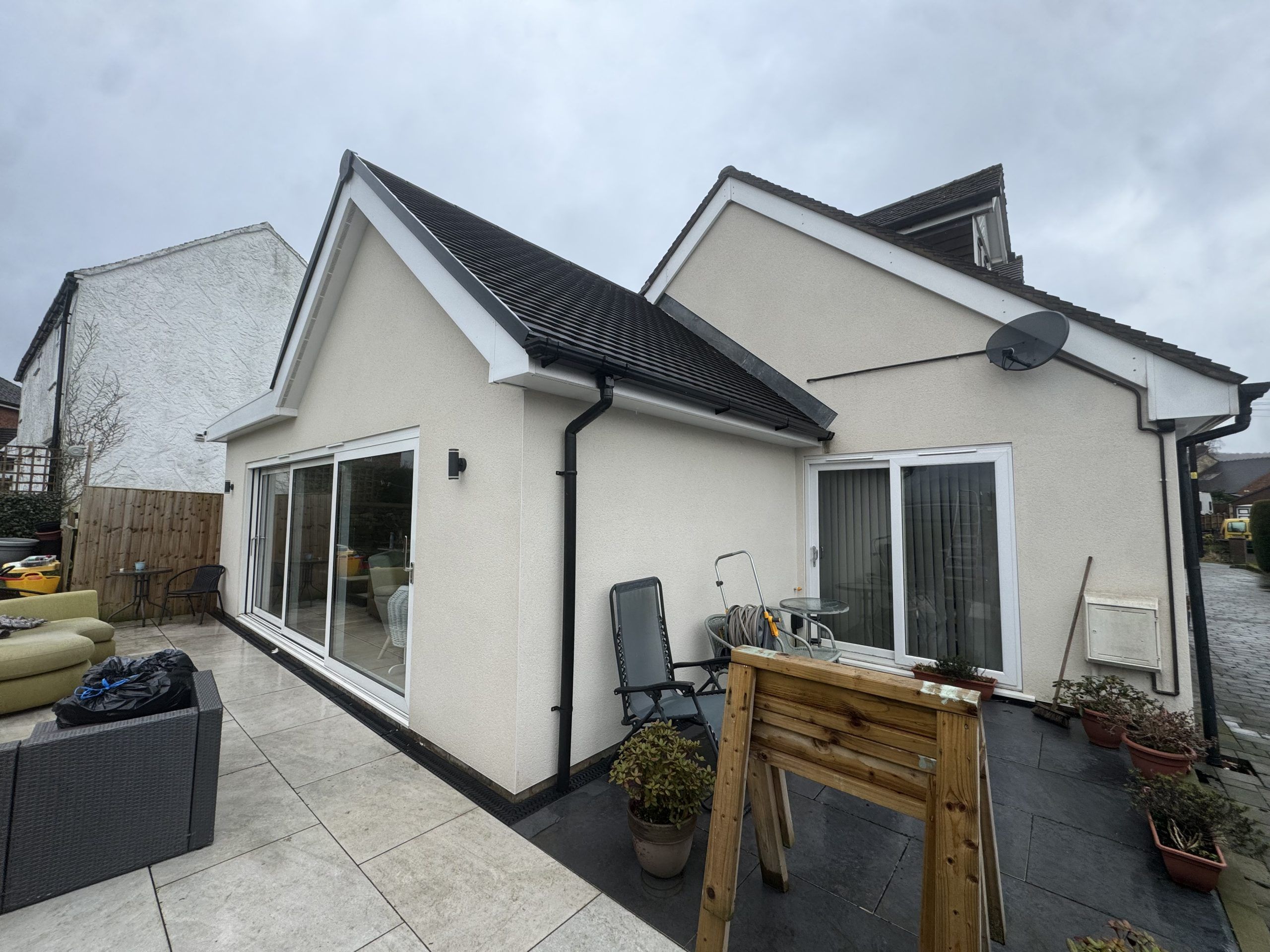
Does Rendering Stop Penetrating Damp?
Penetrating damp is one of the most frustrating problems facing UK homeowners, particularly those in exposed locations where driving rain batters external walls season after season. A question we hear regularly at SM Rendering is whether applying external render will put a stop to it for good.
The short answer is yes — when the correct render system is chosen and applied properly, rendering creates a continuous waterproof barrier across your external walls, preventing rainwater from working its way into the brickwork and through deteriorating mortar joints.
That said, rendering is not a universal cure for all forms of damp. It specifically addresses water ingress that originates from rain hitting the outside of your walls. If your property is affected by rising damp coming up from the ground, or by condensation forming on cold internal surfaces, rendering alone will not solve those problems. Understanding exactly which type of damp you are dealing with before spending money on any treatment is absolutely essential.
Understanding Penetrating Damp in External Walls
Penetrating damp occurs when rainwater forces its way through the outer shell of a building and travels inward. Unlike rising damp, which moves vertically up from the ground, penetrating damp typically produces horizontal wet patches on internal walls that appear or worsen during and after heavy rainfall.
Solid-walled properties are particularly vulnerable because there is no cavity to intercept moisture before it reaches the inner leaf. West-facing and gable-end walls tend to suffer most, as they receive the heaviest exposure to driving rain. Signs to look out for include damp patches on interior walls, paint or wallpaper bubbling and peeling, softening or crumbling plaster, and patches of mould in corners or behind furniture. A musty smell is often the first clue before any visible damage appears. If a moisture meter reads above 20 percent on the affected wall, active moisture penetration is confirmed.
The most common causes in UK properties are broken or blocked guttering and downpipes, cracked or porous brickwork, worn-out mortar pointing, and damaged or defective render that has already lost its protective function. Even small cracks in existing render can channel rainwater straight to the substrate beneath.
How Rendering Creates a Barrier Against Water Ingress
External render works by encasing the brickwork and mortar joints in a continuous protective skin. Applied at a typical thickness of 10–15 mm, it fills minor surface irregularities and seals the routes through which water would otherwise enter. Provided the surface remains intact, rainfall runs harmlessly off the face of the wall rather than soaking through.
The type of render used makes a significant difference to long-term performance. Cement render is the most affordable option but offers limited flexibility and poor breathability, meaning it is prone to cracking as buildings settle and move, and it can trap moisture already present in the wall. Monocouche render is a single-coat system that performs better than standard cement and carries moderate breathability. Silicone render is the premium modern choice — it repels water effectively, allows water vapour to escape from the wall, and remains flexible enough to resist cracking even in older properties that experience movement. Lime render is the traditional option best suited to pre-1919 buildings, offering excellent breathability and compatibility with soft historic brickwork, though it requires more ongoing maintenance than modern systems.
Breathability is a critical factor that is often overlooked. All walls carry some residual moisture, and if that moisture has no route to escape, it becomes trapped and causes damage from the inside. A render that keeps rain out while allowing vapour to pass through — as both silicone and lime renders do — will protect your home far more effectively over time than a simple waterproof cement coat that seals the wall completely.
What Needs to Happen Before New Render Goes On
Applying new render over a wall that already has active damp is one of the most common and costly mistakes made in damp remediation. Rather than solving the problem, it traps moisture inside the wall where it cannot escape, accelerating brick and mortar deterioration and causing the new render to blister and fail within months.
Before any rendering work begins, a thorough damp survey should be carried out. Moisture meter readings should be taken at multiple points across the wall to confirm the extent and severity of the problem. Thermal imaging can reveal hidden cold spots and wet areas that are not yet visible to the naked eye. The type of damp must be correctly identified — penetrating, rising, or condensation — because each requires a different approach.
Any underlying defects must be addressed before rendering. Cracked or loose existing render needs to be stripped back. Mortar joints in poor condition should be repointed. Guttering and downpipes that are blocked, leaking, or discharging too close to the wall must be repaired or repositioned. If rising damp is also present, a functioning damp-proof course must be installed or reinstated before rendering takes place. Covering rising damp with render will not stop it; it will simply push the moisture sideways into adjacent areas or up into the wall above.
Choosing the Right Render for Your Property
Wall construction type is the single most important factor when selecting a render system. Solid-walled properties, which are common in homes built before 1919, must be treated with breathable renders. Applying a hard cement render to Victorian or Edwardian brickwork is a well-documented cause of accelerated deterioration, as the render is harder and less permeable than the bricks it covers, forcing moisture to move sideways and damage the substrate rather than evaporating naturally. Lime or silicone renders are the appropriate choice for these properties.
Modern cavity-wall construction is more tolerant and can accommodate a wider range of render types, since the air gap provides an additional line of defence against moisture reaching the inner leaf. Stone-built properties should be treated with lime render only. Coastal properties benefit from silicone render, which offers resistance to salt as well as rain.
For homeowners looking to address both damp and energy efficiency in one project, combining external wall insulation with a render finish is worth considering. The insulation board sits between the wall and the render, keeping warmth in and eliminating the cold spots that cause condensation. This combined approach typically costs 30–40% more than render alone but can deliver meaningful reductions in heating bills alongside lasting damp protection.
Maintenance and Long-Term Performance
Even the best render system requires periodic attention to maintain its effectiveness. Building movement, temperature fluctuations, and the relentless British weather will cause hairline cracks to develop over time. Left unattended, these small defects allow water to work its way behind the render surface where it becomes trapped against the wall.
A visual inspection of your render twice a year — ideally in spring and autumn — allows you to spot developing cracks, loose sections, or areas where water may be finding a way in around window and door frames. Any cracks should be filled promptly, ideally within a month of being noticed. Painted render finishes will need recoating every five to seven years to maintain their water-resistant properties. Modern silicone render systems, when properly installed and maintained, can comfortably last 20 to 25 years before major remedial work is required.
Keeping guttering and downpipes clear and in good repair is equally important. Overflowing or leaking gutters are one of the leading causes of render failure and penetrating damp in UK properties. Downpipes should discharge water well away from the base of the wall to prevent splashback and reduce the risk of rising damp alongside the penetrating variety.
If you are unsure whether rendering is the right solution for your property, or if you are seeing signs of damp and want an honest assessment before committing to any work, get in touch with the team at SM Rendering. We can visit your property, carry out a proper assessment, and advise you on the most effective and cost-efficient course of action.