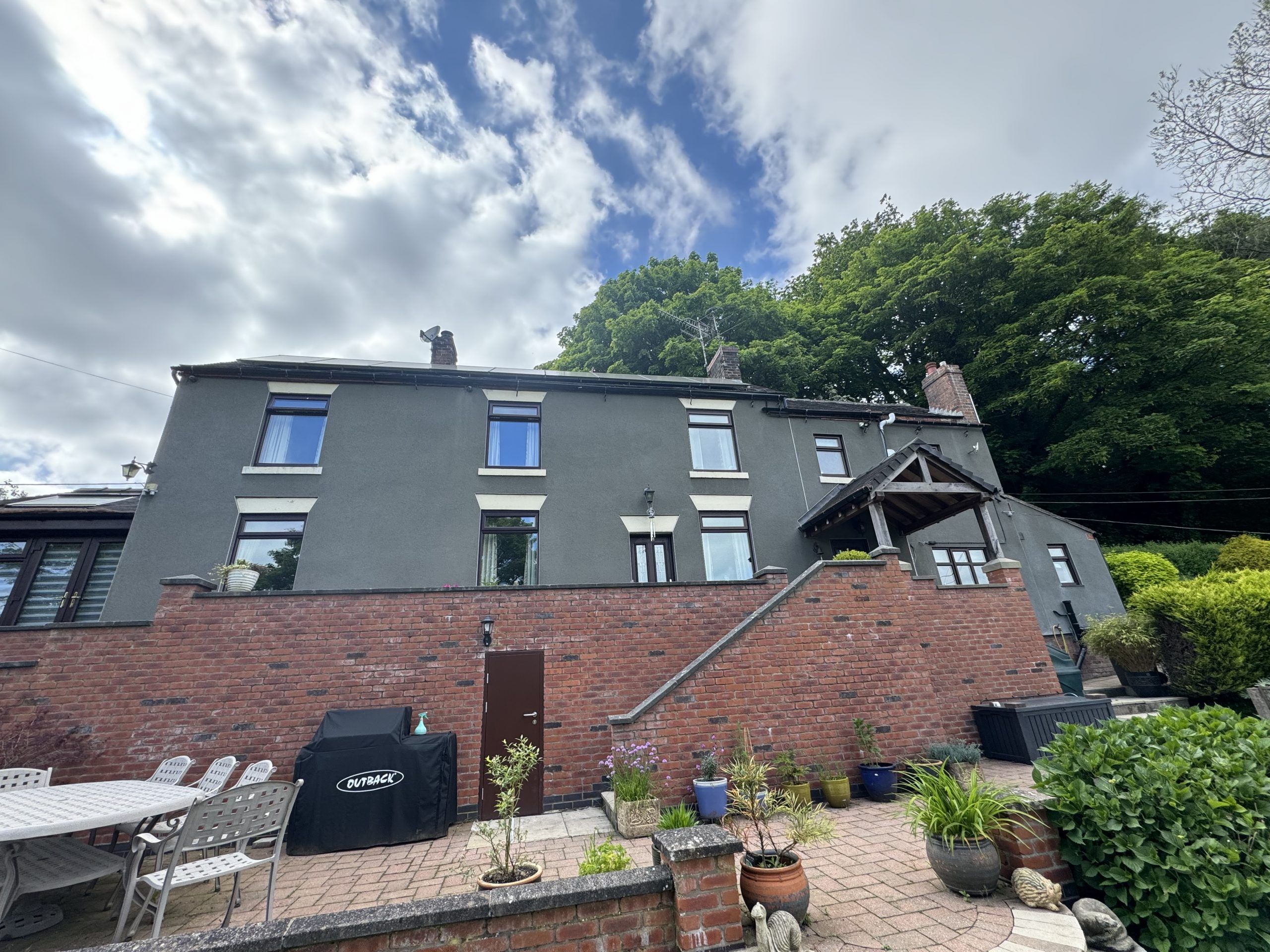
Types of Cement Render Finishes
Choosing the right render finish can transform the look and performance of a building. Below we explain common cement-based render finishes, their characteristics, where they’re best used and maintenance tips so you can make an informed choice.
Common cement render finishes
Smooth finish (trowel finish)
What it is: Fine sand and cement render finished with a steel trowel to produce a flat, smooth surface. Can be left natural or painted.
Pros: Contemporary appearance, easy to clean, good base for paint or breathable coatings.
Cons: Shows imperfections and requires skilled application to avoid trowel marks.
Best for: Modern façades, feature walls and interior plaster that needs a clean, minimal look.
Scratch / keyed finish
What it is: First coat of render is scratched with a comb to create a key for subsequent coats. Often used with multi-coat systems.
Pros: Excellent adhesion between layers; helps build thickness and durability.
Cons: Not decorative on its own — usually covered by a topcoat.
Best for: Substrates that require increased bonding and multi-layer render systems.
Dash (Pebbledash / Roughcast)
What it is: Coarse aggregate (grit or small pebbles) is thrown onto a wet coat of render so it adheres and creates a rough, textured surface.
Pros: Highly durable, hides imperfections, offers excellent weather protection.
Cons: Harder to clean and repair; the look is bold and not for every style.
Best for: Traditional homes, coastal properties and walls that need extra protection from rain and impact.
Sponge finish (dashed-sponge)
What it is: A sponge or brush is used on a nearly set render to produce a softer, stippled texture.
Pros: Attractive, hides minor imperfections, works well with subtle colours.
Cons: Can be inconsistent if the render sets unevenly; requires careful timing.
Best for: Decorative façades and where a softer texture is desired.
Polished / float finish
What it is: The render is floated and then burnished to produce a fine, slightly reflective surface. Often used with coloured or cementitious renders.
Pros: Elegant look, low maintenance, weather resistant when properly cured.
Cons: Prone to hairline crazing if cured too quickly; requires good workmanship.
Best for: Urban developments, clean contemporary builds and boundary walls where a neat finish is important.
Coloured render (through-coloured render)
What it is: Colour pigments are mixed into the render so the colour is integral rather than painted on later.
Pros: Long-lasting colour, reduced maintenance — scratches don’t show as clearly as on paint.
Cons: Colour selection needs planning; touching up requires matching the original mix.
Best for: Low-maintenance exteriors and projects where long-term colour stability is required.
Specialist renders: monocouche, acrylic & lime
Monocouche: A single-coat, through-coloured cement render that gives a consistent finish and is quicker to apply than multi-coat systems.
Acrylic/Silicone-enhanced renders: Cement render blended with acrylic or silicone additives for improved flexibility, water-repellency and crack resistance.
Lime render: Breathable and traditional, lime renders suit historic buildings and those requiring moisture-regulating finishes.
Best for: Monocouche for fast coloured finishes; acrylic for modern low-maintenance facades; lime where breathability is essential.
How to choose the right finish
- Architectural style: Smooth and float suits modern builds; dash and textured finishes suit traditional homes.
- Exposure & durability: Coastal or high-wind sites benefit from coarse, protective finishes.
- Maintenance appetite: Smooth painted renders need more frequent repainting than through-coloured renders.
- Substrate & regulations: Older or listed buildings may require lime-based systems — always check planning or conservation requirements.
Maintenance & practical tips
General maintenance keeps render looking great and extends lifespan:
- Inspect annually for cracks or delamination. Small hairline cracks can be filled; larger defects may need a professional repair.
- Keep gutters and flashings in good order to prevent damp staining and water ingress behind the render.
- Use low-pressure cleaning for textured finishes; aggressive pressure washing can damage softer renders.
- When repainting, choose breathable exterior paints for cement or lime-based renders to avoid trapping moisture.
Cost & timescale (guide)
Costs vary by finish, accessibility and region. As a rough guide:
- Simple smooth render (labour + materials): low–medium
- Dash and textured finishes: medium–high (more materials, longer application)
- Specialist renders (monocouche/through-colour): medium–high (material cost higher but quicker application)
For an accurate quote tailored to your property, contact a local installer who can inspect substrate, scaffolding needs and finish choice.
Summary
There’s a wide range of cement render finishes — from smooth modern trowel finishes to traditional pebbledash and breathable lime renders. The right finish depends on aesthetics, durability needs, and maintenance expectations. If you’re unsure, a site visit with samples will help you see how finishes behave in natural light and meet your performance needs.